Care Without Commotion: A Chauffeured Approach to Private Medical Appointments
Private medical travel asks something different of a chauffeur service. The appointment may be routine or significant, brief or prolonged, but the passenger is rarely simply going from one address to another. They are moving between the privacy of home and the clinical calm of a consulting room, often carrying a degree of apprehension that no itinerary can entirely remove. The ground segment should not add to it.
In London, that distinction matters. The capital’s private clinics and consulting rooms are dispersed across Harley Street, Marylebone, the West End and the major private hospitals beyond, each with its own approach, drop-off arrangements and rhythms. A polished chauffeur service does not merely know the postcodes. It understands that the journey is part of the care surrounding the appointment.
The journey before the appointment
The first principle is timing, but not the aggressive timing of an airport run. Medical appointments seldom reward an early arrival that leaves the passenger waiting anxiously in a reception area, nor a late one that introduces unnecessary stress. A sensible buffer is essential, particularly for those travelling during the morning peak or across central London when roadworks, diversions and event traffic can alter the best-laid route.
A chauffeur who has been properly briefed will plan for the clinic’s particular arrangements. Some premises have discreet side entrances; others require the driver to announce the vehicle at a barrier or use a designated forecourt. Knowing this in advance prevents the small indignities of circling the block or being directed away at the final moment. For appointments in 2026, with central London traffic as unpredictable as ever, that local knowledge is not a luxury. It is the difference between a composed arrival and a hurried one.
Discretion as a matter of routine
Discretion in this context is not theatrical. It is the absence of unnecessary intrusion. An unmarked vehicle, a chauffeur dressed appropriately but without ostentation, and a brief that extends only to the practicalities of the journey all help to preserve privacy. The driver need not know the nature of the appointment. He or she needs to know the destination, the timing, the passenger’s preferences and how much assistance may be required.
For some clients, that means a quiet car and no conversation beyond a greeting. For others, a few words of reassurance or a familiar voice are welcome. The distinction is best established in advance, not improvised at the kerb. A good chauffeur reads the cabin; a better service asks the question before the passenger ever steps inside.
Matching the vehicle to the visit
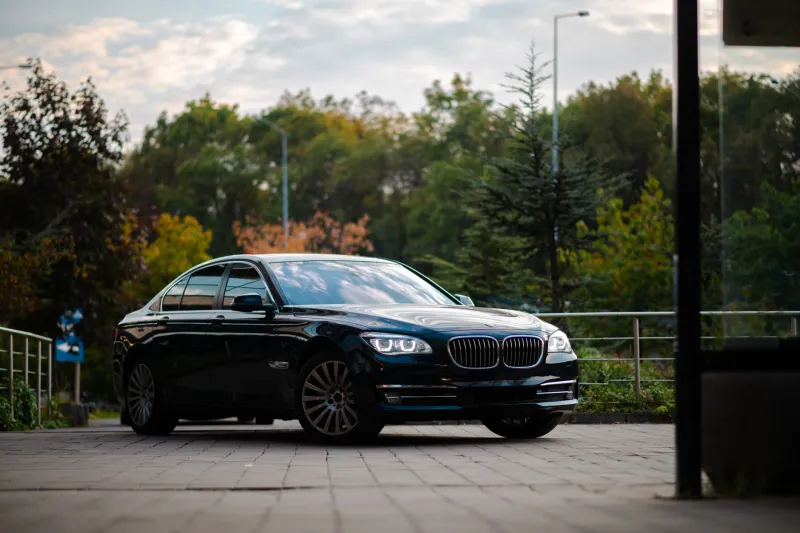
Vehicle choice should follow the passenger and the procedure, not the other way around. A saloon may suit a straightforward consultation and a solo traveller. An SUV or crossover can make ingress and egress easier where mobility is limited, while a larger MPV may be the sensible choice for a family accompanying an elderly patient or for a return journey that requires more space for luggage, equipment or a wheelchair.
Comfort is cumulative. Smooth suspension, a quiet cabin, effective climate control and a seat that supports rather than swallows the passenger all matter more on a sensitive journey. For post-procedure returns, a vehicle with a low step, a generous door aperture and a calm ride quality is often preferable to the most prestigious model in the fleet. The finest choice is the one the passenger barely has to think about.
Waiting, returning and the space in between
Waiting arrangements deserve particular attention. A chauffeur can hold at or near the clinic for an agreed period, remain contactable by telephone, or withdraw and return at a confirmed time. Each approach has its place. A fixed wait is reassuring when the appointment is expected to be short; a nearby reposition is better for longer consultations, when occupying a clinic forecourt for hours serves nobody.
The return leg is often where the service proves itself. A passenger who has undergone a procedure may be tired, medicated or simply less inclined to manage details. The chauffeur should be ready at the arranged entrance, not at the nearest available parking bay, and should be prepared to assist at a measured pace. Water, a blanket and a quiet route home are small provisions. Together, they turn a clinical appointment into a day with a composed beginning and a gentle end.
A calmer ground segment
Private medical travel is not a niche aside to executive chauffeur work; it is one of its most exacting forms. It requires punctuality without fuss, comfort without display and discretion without distance. For visitors to London’s clinics, and for residents who would rather not ask family or colleagues to navigate the traffic, a chauffeured car offers something valuable: the removal of the journey as a source of concern.
The appointment remains the appointment. The traffic remains the traffic. But the space around them can be made quieter, more predictable and altogether more civilised. That is the purpose of the ground segment, and it is the standard to which Mayfair Drives Ltd holds every private medical journey.