The Last Hour of 2026: A Chauffeured New Year's Eve from Mayfair
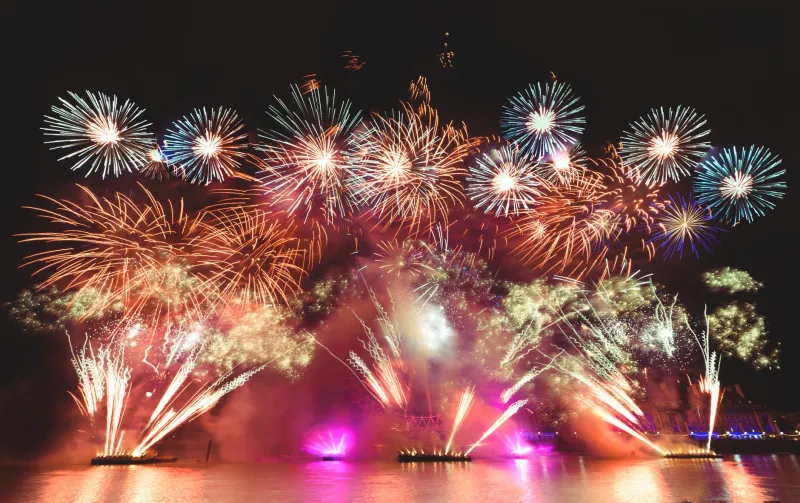
New Year's Eve in London is rarely a single journey. It is a sequence of thresholds: the restaurant door, the edge of the crowd, the moment the bells fall silent, and the quiet road home. The temptation is to chase the clock and hope the city cooperates. The more civilised approach is to remove friction in advance, so that the evening feels less like an operation and more like an occasion.
A chauffeur is not a taxi with a nicer interior. On 31 December, the vehicle and its driver become a fixed point in a city that is temporarily reorganising itself around crowds and closures. The service works best when it is planned as infrastructure rather than summoned as an afterthought.
Begin with the booking, not the bells
Demand for chauffeured vehicles in central London on New Year's Eve is concentrated and unforgiving. enquiries should be made well before December; for 2026, late October or early November is a sensible window for a Mayfair start. By mid-December, choice of vehicle and timing narrows considerably.
When briefing an operator, state the shape of the evening rather than a single destination. A typical request might run from 18:30 until 01:30, with an early dinner in Mayfair, a river viewing point thereafter and a return to a Mayfair address. Ask how waiting time is calculated, how the chauffeur will communicate if a road closes, and whether the operator has a contingency plan for post-midnight collection. A fixed itinerary with agreed buffers is more useful than an open-ended instruction to "see where the night goes".
The early Mayfair dinner
Mayfair restaurants on New Year's Eve often run two sittings. The later one can leave little room for a calm departure, particularly if the kitchen is pacing courses towards midnight. An early sitting, between 18:30 and 19:00, allows dinner to be enjoyed rather than rushed and leaves a generous margin before the streets around the river become difficult.
For the drop-off, choose a sensible kerb rather than the restaurant door. Mount Street, Berkeley Square and the quieter edges of Piccadilly can be more practical than a congested corner where the vehicle would simply sit in traffic. In many cases, a two-minute walk is faster than a five-minute crawl. The chauffeur can then be released and recalled by telephone when dinner concludes, rather than circling Mayfair in search of a space that does not exist.
Reading the closures
Transport for London publishes details of road closures for the capital's New Year's Eve celebrations, and the managed zone around Westminster and the South Bank expands through the afternoon and evening. Victoria Embankment, Westminster Bridge, Waterloo Bridge, Blackfriars Bridge and sections of the Strand and Whitehall are typically affected. Some roads close to all traffic, including chauffeured vehicles, and pedestrian management can alter access at short notice.
This is the part of the evening where expectations must be realistic. A chauffeur cannot cross a closed cordon, and asking a driver to "get as close as possible" usually produces dead time in stationary traffic. The better plan is to identify a drop-off point outside the managed zone, accept a ten- to fifteen-minute walk, and agree a separate collection point for later. The chauffeur should be given both postcodes in advance, along with a fallback if the first is inaccessible.
The viewing point
Official fireworks viewing areas on the Victoria Embankment require tickets, and access is controlled. Private hospitality, members' clubs and river-facing hotels may offer alternatives, but each has its own arrival arrangements. Confirm in advance whether a vehicle can approach the entrance, where guests are expected to walk, and whether there is a designated pick-up point after midnight.
If the evening is built around a private address or a booked venue, treat the final approach as a walking segment. Mobile networks are heavily congested at midnight, so agree the meeting point and time before the crowds gather. A printed address and an offline map are unglamorous but useful. The chauffeur should know the party size and be briefed on any mobility considerations, so that the collection does not become a search.
The post-midnight return
The return journey is where even well-planned evenings falter. Thousands of people leave the viewing areas at once, roads remain closed, and taxis are scarce and expensive. A vehicle booked until 01:30 may be unable to reach a pick-up point inside the crowd zone; a driver who attempts it risks being stuck and unavailable.
The civilised solution is to walk away from the densest crowd before calling the car. A pre-agreed pick-up point fifteen to twenty minutes on foot from the viewing area, outside the closure zone, allows the chauffeur to wait at a quiet kerb rather than in a throng. Build in thirty to forty-five minutes for that walk and for the vehicle to arrive. It is not wasted time; it is the difference between a controlled departure and a scramble.
What effortless actually requires
An effortless New Year's Eve is not the product of luck. It is the result of fixed timings, clear pick-up points and a chauffeur who has been briefed on the whole sequence rather than a single leg. A warm vehicle, still water and a telephone charger are welcome details, but they matter less than a plan that anticipates closures and crowds.
Once clear of the managed zone, the return to Mayfair can be swift. Park Lane and the approaches to the west are often quieter after midnight, and the city resumes its ordinary geometry. The finest transfer of the evening is the one that is barely noticed: a door held open, a route already decided, and the last hour of 2026 allowed to pass without unnecessary haste.