The Quiet Encore: Chauffeured Homeward from London's Late Opera and Ballet
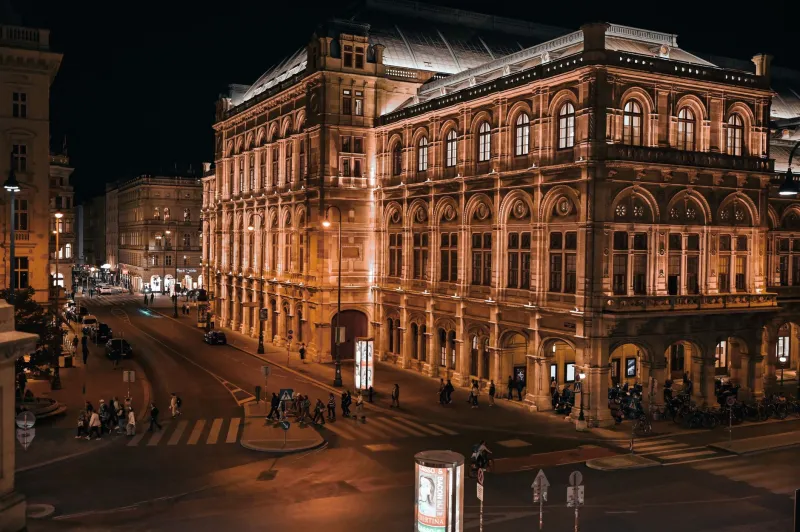
An opera or ballet evening in London has two distinct movements. The first is the performance itself: the hush before the overture, the interval glasses, the applause that swells and then fades. The second is the return. It is the part that is rarely discussed and yet often determines how the night is remembered. A late curtain, a crowded pavement and a cold November rain can undo the composure of even the most carefully planned evening. A chauffeured car, booked in advance and waiting a short walk from the foyer, restores the proper sequence: performance, supper or a nightcap, and a quiet journey home.
In 2026, London's major houses continue to attract audiences from across the country and abroad. The Royal Opera House in Covent Garden, the London Coliseum on St Martin's Lane and Sadler's Wells in Islington each have their own rhythms, their own exits and their own particular challenges after the final curtain. The wise approach is not to treat the car as an afterthought but as part of the evening's architecture.
The Shape of a Late Performance Evening
Most evening performances at the Royal Opera House and the London Coliseum finish between roughly ten and half past ten, though running times vary by production and occasional overruns are part of live theatre. Sadler's Wells, with its mix of dance and opera, can finish at a similar hour or slightly earlier. It is therefore sensible to discuss the likely curtain time with your chauffeur when booking, and to provide the production name rather than a fixed hour alone. A good chauffeur will monitor the schedule and adjust the collection accordingly, rather than idling outside a darkened foyer for half an hour.
Dinner should be planned with the same calm. A pre-theatre table at a quarter to six, with the car collecting from Mayfair at a quarter past five, allows for traffic, a relaxed first course and a short walk to the auditorium. For those who prefer to dine afterwards, a late reservation near the theatre or back in Mayfair can be arranged, though it is worth remembering that kitchens close earlier than opera houses. The chauffeur can hold the car nearby during the performance and reposition to the agreed collection point once the final applause begins.
Collection Points Away from the Crowd
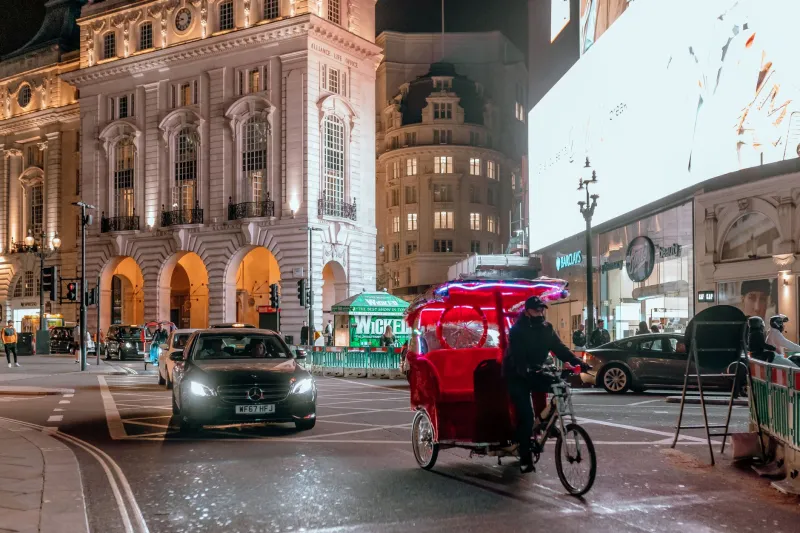
Covent Garden is delightful at seven in the evening and somewhat less so at ten thirty, when the pavement outside the Royal Opera House becomes a meeting of umbrellas, taxis and theatregoers. Rather than joining the scrum on the piazza, a discreet collection can be arranged on a quieter adjacent street, a short and well-lit walk from the foyer. Bow Street, Russell Street and Tavistock Street all offer more breathing room than the main colonnade, and your chauffeur will send a precise location pin on the day. The aim is not distance but dignity: a few dozen yards away from the crowd can transform the end of the evening.
For the London Coliseum, the immediate surroundings of St Martin's Lane are busy with pedestrians and westbound traffic. A collection on a neighbouring street, agreed in advance, avoids the need to stand at the kerb while the audience disperses. At Sadler's Wells, Rosebery Avenue and the surrounding streets are quieter but still subject to theatre traffic; a pre-arranged meeting point near the entrance, or a short walk to a calmer kerb, keeps the departure orderly.
Dinner, Interval and the Civilised Pace
The interval is not merely a pause for refreshments. It is a chance to reset the evening. Pre-ordering interval drinks, where the house allows it, removes one queue from the night. A chauffeur who knows the performance is running long can adjust the dinner reservation or hold the car without any need for telephone calls from the auditorium. This is the quiet advantage of a pre-booked service: the logistics continue in the background while the audience remains where it belongs, in the stalls or the amphitheatre.
For those travelling some distance after the performance, a thermos of tea or a bottle of water in the rear seat is a small but welcome detail. In winter, a pre-warmed cabin and a spare umbrella by the door make the walk from foyer to car feel considerably shorter.
When Winter Intervenes
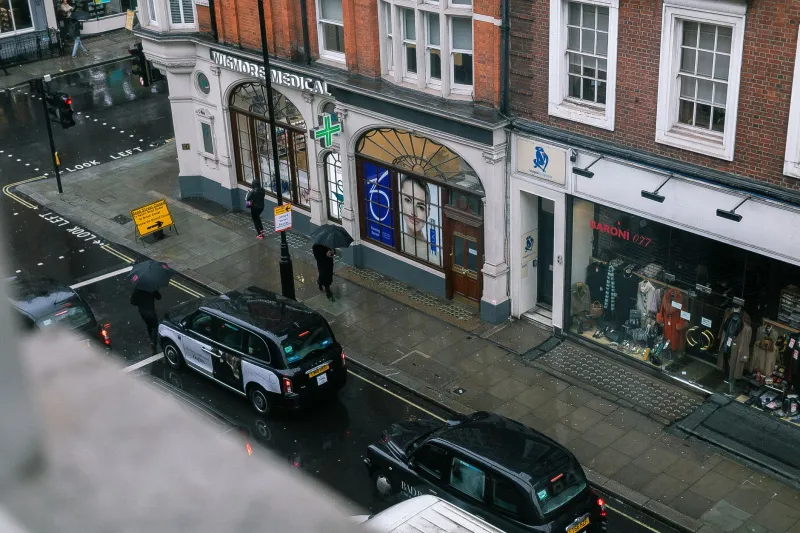
London's late-autumn and winter weather is rarely dramatic, but it is often damp, windy and cold. A performance that ends in steady rain can turn a five-minute wait into an uncomfortable ordeal. A chauffeured car should therefore be treated as weather insurance as much as transport. The driver can wait in a nearby side street, monitor the theatre's exit signs and move to the collection point as the audience begins to appear. Coats and scarves can be left in the car if the evening begins with dinner, and the cabin can be kept at a comfortable temperature throughout.
Ice is the other consideration. On a frosty night, the short walk from theatre to car should be along a well-lit and gritted route, and the chauffeur can advise on the safest approach. If the performance overruns, the booking should be flexible enough to accommodate it. A reputable service will not charge by the minute for a live performance's natural variation; it will build the evening around the theatre's schedule.
Why the Rear Seat Is the Civilised End
The final curtain is not the end of the evening; it is the moment when the evening's tone is either preserved or lost. A pre-booked rear seat offers privacy, warmth and a measured conclusion. There is no queue, no app, no uncertain wait on a wet pavement. There is simply the car, the driver and the quiet road home. For a night of opera or ballet, that is the appropriate encore.
To arrange a late-performance collection from the Royal Opera House, London Coliseum, Sadler's Wells or any London venue, Mayfair Drives Ltd can plan the car around the curtain, the dinner table and the weather. The performance belongs to the artists; the journey home should belong to you.