A Procession of Small Calms: The Chauffeured Mayfair Wedding Morning in 2026
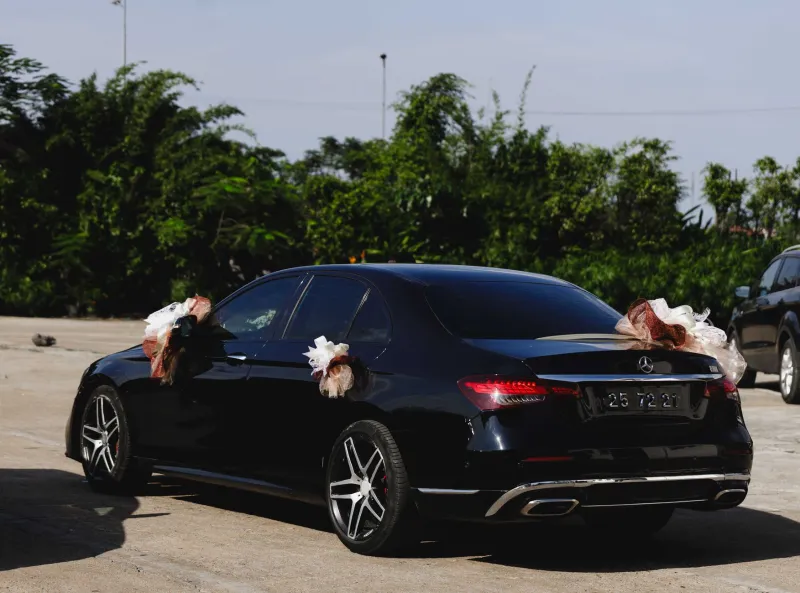
The wedding morning is rarely one journey. It is a collection of small journeys, each with its own passengers, timings and emotional weight. A bridal car may leave Mount Street while a second vehicle is still collecting grandparents from a hotel near Berkeley Square. A third may be waiting to take the bride and groom onward to a reception in the country. The purpose of a chauffeured plan is not to make the day theatrical. It is to remove the ordinary friction that can unsettle an extraordinary occasion.
For a Mayfair wedding in 2026, the geography itself argues for careful sequencing. The streets around Grosvenor Square, Bond Street and Hanover Square are elegant but unforgiving when a schedule begins to slip. A well-built plan accepts this. It allows for the unexpected without allowing the unexpected to become the story.
Begin with the household, not the car
The most useful document on a wedding morning is not a vehicle list but a passenger schedule. Before any car is assigned, the planner should set out who is travelling, from where, at what time and with whom. A bride may wish to travel with her father; a mother may prefer to arrive separately with younger children; bridesmaids may need collecting from two different addresses. These are not logistical details to be settled at the kerb. They are decisions to be made in advance, calmly, with names and telephone numbers attached.
A single point of contact is essential. Ideally, one member of the wedding party or a planner should hold the master schedule and speak to the chauffeur team. Multiple callers, however well intentioned, create competing versions of the same morning. The chauffeur should know the plan, the alternative and the person authorised to change it.
Dress and accessories deserve their own paragraph in that plan. Wedding dresses travel best when the interior of the car has been prepared for them: a clean, dry cabin, a seat position that allows the fabric to fall rather than fold, and a chauffeur who understands that the gown is not merely luggage. Shoes, veils, buttonholes and jewellery are best carried in a single labelled case rather than distributed among handbags. A small supply of water, tissues and a lint roller is sensible. So is an umbrella, kept discreetly to hand rather than produced in a flurry at the church door.
The bridal collection: time, threshold and calm
The bridal collection should be fixed to a departure time, not an arrival guess. Central London traffic in 2026 rewards those who build in a margin of twenty to thirty minutes for a journey that might ordinarily take ten. The car should arrive before the bride is ready, not after. Waiting in a quiet vehicle is a far better experience than being hurried down a staircase by a driver who is watching the clock.
For a ceremony at a church such as St George’s, Hanover Square, or at a registry office elsewhere in central London, arrival ten to fifteen minutes before the service is usually sufficient. Arriving too early can leave the bridal party exposed at the entrance; arriving too late creates a pressure that no bouquet can disguise. The chauffeur should know the drop-off point and the pickup point separately. At many London venues these are not the same, and the difference matters when a dress is involved.
Where two vehicles are used, the bride’s car should not be delayed by the bridesmaids’ car, nor the bridesmaids by the bride. Separate collections, separate departure times and a shared understanding of the ceremony start will keep the morning moving without visible haste.
Family and guests: the unglamorous half
The family collections are where good chauffeur planning proves itself. Grandparents may need a little more time at the door. Young children may need car seats, which should be confirmed in advance rather than improvised on the day. Guests staying at Mayfair hotels may be better served by a short shuttle than by a convoy of individual cars. A single, quietly managed transfer can reduce the number of arrivals, the number of parking attempts and the number of telephone calls.
The chauffeur should be briefed on accessibility needs and on any passenger who may prefer not to be hurried. In a formal setting, this is not fussing; it is simply good service. The aim is for every guest to arrive composed, whether they have travelled from around the corner or from another country.
Photography stops and the onward transfer
A wedding morning often includes a short photography stop between preparations and the ceremony, or between the ceremony and the reception. These stops should be brief, pre-agreed and close to the route. Mount Street, Grosvenor Square and Berkeley Square can provide elegant backdrops, but they are not places to attempt a lengthy session when a schedule is tight. Ten to fifteen minutes is usually enough if the photographer knows the plan and the car remains nearby.
The onward transfer requires its own discipline. Bouquets, gifts and outer garments have a habit of being left behind in the excitement. A named person should be responsible for a final sweep of each vehicle. If the reception is outside London, the chauffeur should know the route, the expected arrival time and the name of the person meeting the cars. If the bride and groom are travelling separately from the bridal party, the change of vehicle should be arranged without an audience.
Buffer times and the 2026 complexion
London in 2026 is not a city that can be crossed on assumption. Roadworks, events, demonstrations and the ordinary density of central traffic all argue for a generous buffer. A useful rule is to add a quarter of the estimated journey time, and more where a major ceremony or sporting fixture coincides. The chauffeur team should monitor conditions on the morning and be prepared to adjust the route without troubling the bride.
Weather is the other variable. A rain plan should be discussed in advance, not invented at the church porch. This may mean a different drop-off point, an additional umbrella, or a vehicle positioned closer to the entrance than usual. None of this need be visible to guests. It should simply be ready.
A quiet standard
A flawless wedding morning is not one in which nothing goes wrong. It is one in which nothing goes wrong in front of the people who matter. The chauffeured car has a modest but distinct role: to carry people, garments and expectations through the morning with care, discretion and an unbroken sense of calm. In Mayfair, where the streets are beautiful and the timings are not always generous, that quiet standard is worth planning for.