The Unseen Half of the Journey: A Chauffeur’s Hour Before Collection
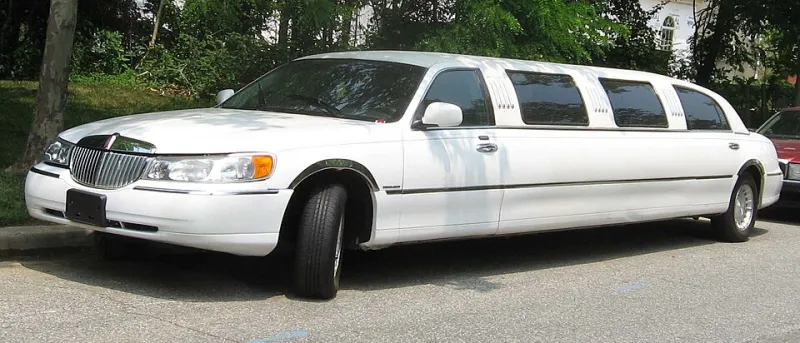
Photo: IFCAR, Public domain, via Wikimedia Commons
There is a moment, familiar to anyone who travels by chauffeured car, when the vehicle appears at the kerb and the day seems to arrange itself around it. The door opens at the correct angle. The cabin is at the correct temperature. The road ahead is already known to be clear, or already understood to be obstructed, with an alternative quietly in place. To the passenger, the car has arrived from nowhere. That is the intention.
What precedes that moment is rarely discussed, partly because it is unglamorous and partly because it works best when it goes unnoticed. An hour before a first collection, the work is already well advanced. It is not a performance of diligence; it is a series of small, practical judgements made in a particular order, each one intended to remove a decision from the passenger’s morning.
The Route, Read Twice
A route is not a line on a map. It is a set of assumptions about a city that changes its mind hourly. The chauffeur will read the route twice: once in advance, when the day’s appointments are confirmed, and again on the morning itself, against live conditions.
The first reading is about structure. Which approach to a Mayfair address is least likely to meet a delivery van reversing into a mews? Where does the one-way system require a longer loop than a passenger might expect? Is the natural drop-off on the correct side of the street for the entrance in question, or does it leave the passenger to cross a flow of traffic? For a departure to Heathrow or Farnborough, the first reading considers the terminal, the airline desk and the likely queue at the security threshold; for a morning of meetings, it considers the order in which the addresses can be visited without retracing ground.
The second reading is about evidence. Roadworks on Park Lane, a closure near Hyde Park Corner, the aftermath of an overnight closure on the Embankment: these are not inconveniences to be discovered in motion. They are factors to be absorbed before the engine is started. A route that has been checked twice is not a guarantee, but it is a reasonable approximation of one.
A Cabin Prepared in Silence
Presentation is often mistaken for polish. In practice it is closer to subtraction. The rear seat should contain what is needed and nothing that invites comment: water at room temperature, charging cables of the correct type, a folded umbrella within reach, a discreetly placed cloth for the inevitable mark on a door panel. Scent is neutral, because a passenger’s own fragrance should be the only one in the car. The temperature is set slightly cool, on the understanding that a cabin warms faster than it cools.
Much of this is done in a quiet hour that no one witnesses. Glasses are checked for smears at the angle the light will actually fall. The boot is arranged so that a suitcase can be lifted out without a second adjustment. The interior is not merely clean; it is composed, in the way a room is composed before guests arrive. The rear seat is a small room, and rooms are judged on their edges.
The Passenger File
Good preparation is also a form of listening. Before a first appointment, the chauffeur will review the notes attached to the booking: how a name is pronounced, how the passenger prefers to be addressed, whether conversation is welcome or whether the morning is reserved for work. Mobility requirements, luggage count, the number of stops, the onward timing — each note removes a question that would otherwise be asked at the least convenient moment.
A note, however, is not a script. The distinction matters. Preparation should make the passenger feel anticipated, not catalogued. The chauffeur who has read the file carefully will use perhaps a third of it, and will do so lightly. The rest is held in reserve, which is where most good service belongs.
Weather as a Working Document
In November, the forecast is less a piece of information than a working document. Dusk falls shortly after half past four, which changes the character of a late-afternoon collection and the pace of the traffic around it. Wet leaves on the approaches to Knightsbridge, the first of the season’s West End light switch-ons, the early darkness that makes a black car harder to spot from a doorway: these are practical considerations, not atmospherics.
They translate into small adjustments. An umbrella placed where it can be handed out rather than searched for. A drop-off chosen for shelter rather than proximity. Four extra minutes allowed for the difference between a dry route and a wet one. The passenger notices none of this, which is precisely the measure of its success.
The Held Decisions
The final part of the hour is the least visible and the most important: deciding what not to do yet. Arriving too early can be as disruptive as arriving late, particularly at a private residence or a hotel entrance where the kerb is a stage. The chauffeur may hold a short distance away, watching the door, and move forward only when the timing is right. There is a discipline in waiting that is rarely taught and frequently undervalued.
The same applies to communication. A brief message when the car is two minutes away, a word with the concierge, a confirmation that the luggage has been placed — each is a small act of signalling, and each should be used sparingly enough to remain welcome.
Arrival Is the Visible Part
By the time the door opens, the hour has done its work. The route has been checked, the cabin composed, the notes absorbed, the weather accounted for and the timing held. What the passenger experiences is not a demonstration of preparation but its absence: a morning without friction, a journey that seems to have been waiting for them.
That is the quiet proposition of a chauffeured day. The luxury is not the leather or the silence, welcome as both may be. It is the assurance that someone has already thought about the next hour, so that the passenger need not.